Wix Road, Beaumont
Essex, CO16 0AT
01255 871 111

| Oak Business Park Wix Road, Beaumont Essex, CO16 0AT 01255 871 111 |
|
For information on our Newsletter |
Secure Data Destruction and PC Recycling 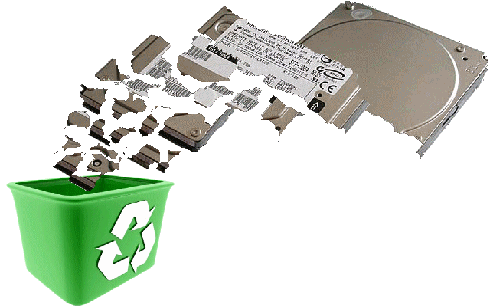 Micrologic offer three levels of Data Destruction or removal and can carry these out at our secure premises in Beaumont or at your site. It is also possible to erase data via our secure remote tool. You will be surprised by our level of service and customer care. Our technical team would be happy to take you through our procedures and demonstrate the level of erasure of your sensitive data. Clearing Clearing is the removal of sensitive data from storage devices in such a way that there is assurance that the data may not be reconstructed using normal system functions or software file/data recovery utilities. The data may still be recoverable, but not without special laboratory techniques. Clearing is typically an administrative protection against accidental disclosure within an organisation. Purging Purging or sanitising is the removal of sensitive data from a system or storage device with the intent that the data can not be reconstructed by any known technique. Purging, proportional to the sensitivity of the data, is generally done before releasing media outside of control, such as before discarding old media, or moving media to a computer with different security requirements. Destruction The storage device is physically destroyed by incineration, melting, shredding, pulverising, drilling or other means that completely prevent data recovery. PC Recycling Micrologic offer two levels of recycling, if your machine is no longer functioning then we have your machine broken down to component level and have all the various elements mechanically and chemically reclaimed, the best part is that none of it goes in to land fill sites, we reclaim 100% of your redundant IT equipment. Our second level helps support underprivledged children in the UK. We purge the machine and complete a factory re-installation and then sell these machines at low cost donating all profits to various charities. Contact us today with your requirements – immediate or future – and one of our specialists will call you back to discuss your needs. 01255 871 111 Email: Micrologic at Oak Business Park Wix Road, Beaumont, Essex, CO16 0AT |
 |
 |
 |
 |
 |
 |
 |
 |
 |
 |